By: James shodiya
Nigeria’s ambition to emerge as the leading maritime and trade gateway in West and Central Africa can only be achieved through an end-to-end modernisation of its ports, including infrastructure, digitalisation, regulation, security and efficient connections to the hinterland, stakeholders in the maritime sector have said.
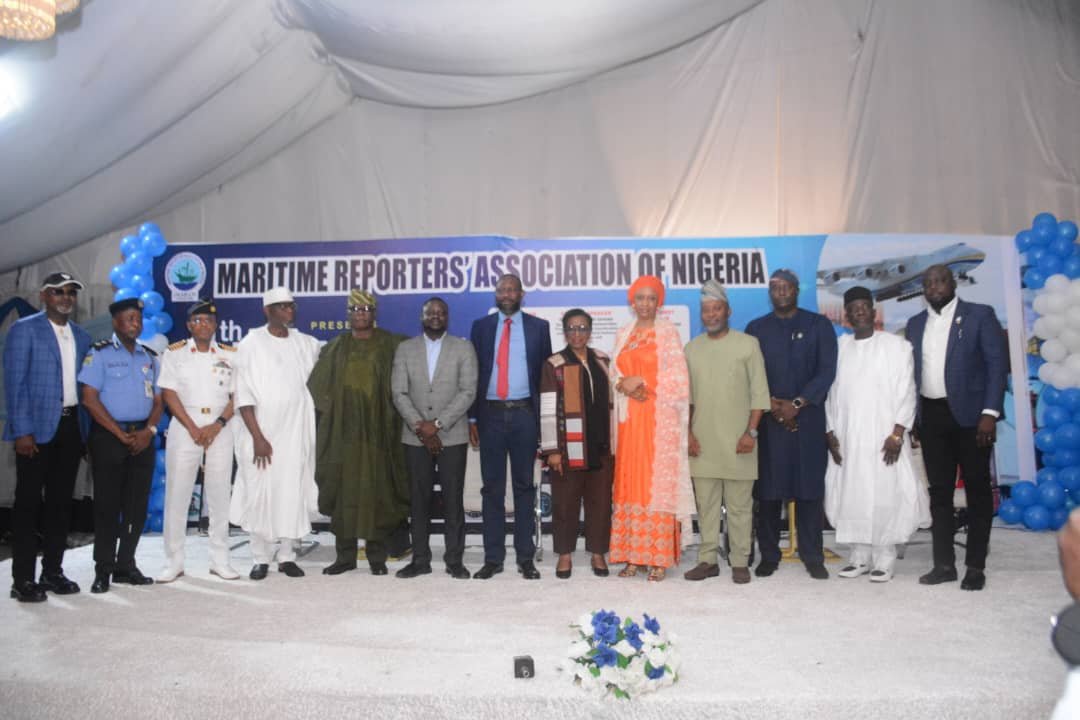
They spoke against the backdrop of growing concerns over port costs, congestion, cargo evacuation and the competitiveness of Nigerian ports at the 2026 Annual Maritime Lecture of the Maritime Reporters Association of Nigeria, MARAN.
Delivering the keynote address, former Managing Director of the Nigerian Ports Authority, NPA and Special Adviser to President Bola Ahmed Tinubu on Policy Coordination and Head, Central Delivery Coordination Unit, Hadiza Bala Usman, said port modernisation must be measured by tangible improvements in cargo movement, turnaround times, logistics costs and export capacity rather than the volume of money spent on infrastructure.
Usman identified six critical dimensions of port modernisation: infrastructure and operational models, modern equipment, digitalisation, institutional reform, human capital development and commercial modernisation involving tariffs, concessions, investment and service quality.
According to her, Nigeria’s seaports handle more than four-fifths of the country’s physical imports and exports, making their efficiency critical to the wider economy.
“When port costs are high, they travel into the price of rice on the trader’s stall, the landed cost of raw materials for the manufacturer and into the exchange-rate pressure created when importers pay dollar-denominated charges on top of naira-denominated uncertainties,” she said.
She commended the recent performance of Nigerian ports, noting that the World Bank and S&P Global Market Intelligence’s Container Port Performance Index showed that Tin Can Island Port ranked 10th globally, while the Lagos Port Complex, Apapa, ranked 12th among the world’s most improved container ports between 2020 and 2025.
Usman also cited increased cargo throughput, digitalisation initiatives and ongoing rehabilitation of major port infrastructure as evidence that reforms were beginning to yield results.
However, she warned that the progress must be consolidated through sustained investment and measurable performance.
She said the reconstruction of Apapa and Tin Can Island ports, rehabilitation of eastern ports, expansion of Lekki Deep Sea Port and development of other facilities would only deliver their full economic value if supported by efficient road, rail, barge, inland logistics and dry-port connections.
“A port cannot be globally competitive if its hinterland is not competitive,” she said.
High port charges threaten competitivenessThe former NPA boss also called for a comprehensive review of Nigeria’s port tariff structure, arguing that the focus should shift from individual charges to the total cost of moving cargo through the Nigerian supply chain.
She noted that reports of the cost of clearing a standard 20-foot container through Apapa reaching about N14 million to N15 million, compared with lower costs at some competing West African ports, should concern policymakers.